When you think of the outdoors, you might think of sunny days, rainy days, big cuddles or wet socks. Fighting with your little ones to put on their coat or breathing in that fresh air! But did you know that there are many other benefits to being outside and getting involved in outdoor play? Not only for physical and mental health but also for learning opportunities?
Children learn so much from being outside, as they walk, run, jump, climb, look, listen, talk, play and explore. There are so many ways that we can get outside without having to spend a penny; let me share with you the benefits of the outdoors, as well as some ideas for activities to do out and about.

Sometimes the biggest hurdle to outdoor play is simply getting outside! When you can, include getting ready together as part of going out.
No! It really doesn’t matter what you do or where you go, you can find opportunities in everything and there’s learning opportunities all around us. For example, can you spot the numbers on the doors or the letters on the street signs? And how big is that bus? Can you hear the birds singing? Should we count the dogs together? The opportunities are endless. If you’re walking to school, going to the shops or just off to the end of the road to post a letter, it can still be an adventure. For lots of ideas and information on the different places you can go and the benefits of outdoor play - try visiting the Play England website.

Being outside opens up a whole world of learning. Whatever the weather, exploring nature and playing outside offers wonderful opportunities to support your child’s learning and development. Outdoor play can:

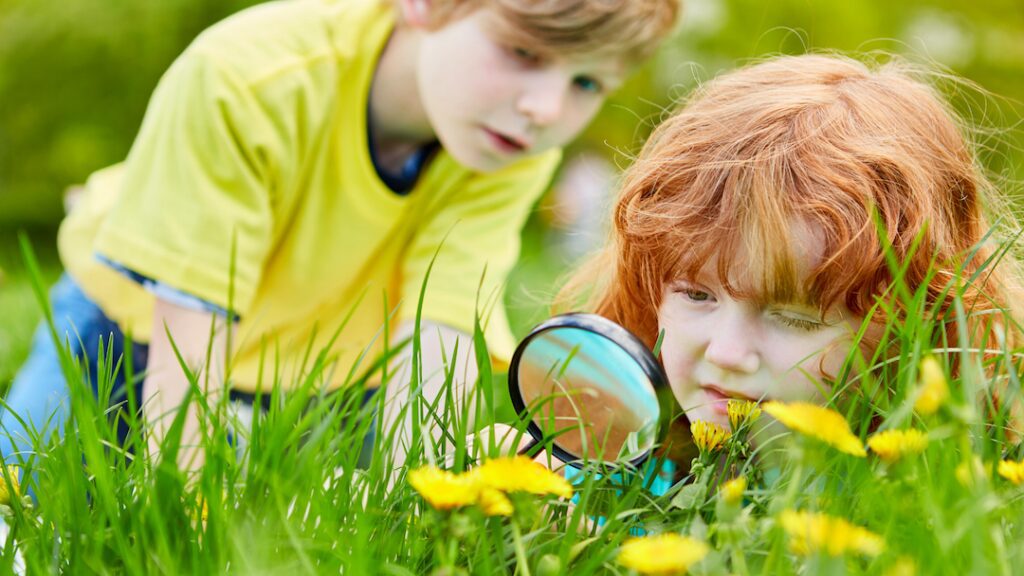
There are some great resources online with ideas for outdoor play. Try looking at The Woodland Trust website for more ideas!
There is lots of scientific research that shows children who are physically active have lower health risks. This is in part because outdoor play uses many different types of muscles. Running, jumping, catching, balancing - all these types of movement support children to build their motor skills. It also lowers their blood pressure, improves their eyesight and strengthens their immune system (Blair and Brodney, 1999; Fjortoft, 2001). Being outside also has mental benefits for children; it promotes higher levels of concentration and attention (Wells and Evans, 2003).
Outdoor environments are not only beneficial for children, but for adults too. Getting outdoors has been shown to significantly reduce levels of stress and positively impact mood (Thompson et al, 2012). Natural light has also been found to increase the production of Vitamin D. This helps to regulate emotions and improve mood in both children and adults. Studies have found that just 5 minutes of outdoor time per day can improve mood and self-esteem. This article in The Conversation talks more about the mental and physical health benefits of outdoor play.
Being outside with nature can have a magical effect on us and children; it allows us to feel free, experience adventures and make lasting memories!
If you have found this helpful and want to find out more about supporting your child’s learning, please check out Peeple’s Facebook page. If you’re a practitioner, you can find out about the Peep Learning Together Programme and training on the Peeple website, or email Charlotte on info@peeple.org.uk.
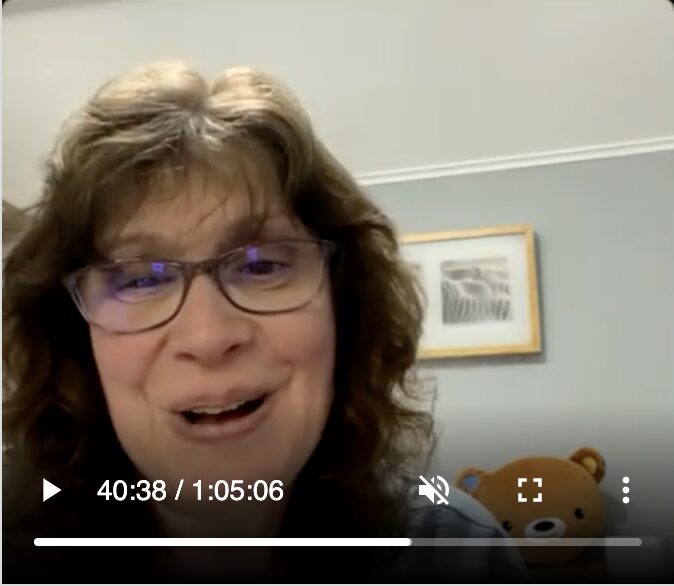
If you’d like to watch and listen to Helen talking about this subject don’t forget you can check out her guest appearance on Dad Chats Live. Our weekly parenting chat hosted on our Instagram Account.
And if you are interested in writing a guest post for us on a subject you feel qualified to talk on please do get in touch and we can explore further.
Has this post inspired you to get outside and play? We'd love to hear about your ideas for outdoor play - or why not try some of the ideas from Helen and tag us in your outdoor play pics on Instagram!
Please leave your comments in the section below and share this post and other Dadvengers Posts with your family and parenting friends.
Dadvengers is a community of parents (that’s Mums and Dad’s) focused on supporting Dads on their journey through parenthood.
Dad Chats Live - This week Nigel discussed Men’s Perinatal Mental Health with Mark Williams from @fathers_mentalhealth
Mark is a well known figure in the UK when it comes to mental health and men. He is the founder of Fathers Reaching Out – an organization with a mission to prevent, treat and spread awareness about fathers’ mental health. Mark is also the founder of International Fathers’ Mental Health Day and has been awarded Inspirational Father of the Year in 2012 and Local Hero at the Pride of Britain Awards. Above all though mark has suffered Perinatal mental health and come through the other side and dedicates his life to helping others get through this traumatic condition. His story is an inspiring and informative one.
A huge thank you to him for bringing his time and knowledge to our Dadvengers community.
Mark has written a wonderful blog post to accompany this chat. As in the chat it covers his own personal experience with the illness and what he has learnt along the way including ;-
If you’d like to read the full article please click on the link. And do feel free to feedback your thoughts on this or any of our posts in the comment sections at the bottom of each page.
Mark also has 2 books that he has published on the subject. Daddy Blues and Fathers and Perinatal Mental Health: A Guide for Recognition, Treatment and Management. Both are great resources for people suffering from this mental health illness
Croup is a viral respiratory infection that tends to affect a low percentage of children under five. It is caused by a swelling in the windpipe and airway, giving them a short barking cough that can last around 48 hours. In severe cases it can be difficult for the child to breathe. To a first-time parent with no knowledge of croup, it can be terrifying, as my wife and I found out when my daughter was just one year old.
I hope that this post will help to raise awareness about croup, its symptoms, and ways to treat it so that, unlike me, you won’t have to wait for a paramedic to answer the question, ‘what is croup?’.
The 1st August 2016 is a day I'll never forget. My daughter Betty was just 14 months old. We'd put her to bed at around 1900. She'd been a great sleeper from day one; settling into her own room without a fuss. More often than not, giving us full undisturbed nights until around 0700 the next morning. However, unfortunately, this wasn't going to be one of those nights.

My wife and I were in the middle of watching a film when I noticed a strange noise coming from the baby monitor; a high-pitched, but low-level squealing sound. I ran upstairs and found Betty struggling to breathe. She was pale, her face bloated and screwed up as if she was screaming, only there was little noise coming from her. I scooped her up, and she barely moved. I ran downstairs with her to my wife and incredibly, we hesitated; "111 or 999?!". Why were we worried about calling 999 when our child was barely breathing?! This is something I will address later in the post, but we did end up calling 111. That said, the moment my wife mentioned that our baby was having difficulty breathing, they said a paramedic and an ambulance was on its way.
As my wife paced up and down the driveway, I sat on the sofa with Betty on my chest. Her eyes were blinking, but she was barely able to breath. She was completely limp. This was fast becoming a nightmare, and I began to think that my 14-month old daughter was about to die on my chest if I didn’t do something. Then the blue lights appeared.
Less than five minutes after our call, two paramedics ran in and were quick to administer a small dose of a steroid to Betty, through an oral syringe - in the same way, that you do with Calpol. Thankfully, Betty was just about lucid enough and was able to swallow it. They then attached a small nebuliser mask to her face. This is an image that chokes me up to this day, even as I'm writing this; the image of my tiny girl, wearing a tiny nebuliser mask struggling to breathe. It was heart-breaking, but as the oxygen started flowing, and the steroid started getting to work, barely a minute passed before her eyes brightened, the colour returned to her cheeks, and I could see her chubby smile appear under the mask as she began playing with the tube of the nebuliser.
“So what had happened?” I said. "Croup", they said. We then had to get in the ambulance and take her to hospital where she would be observed for a minimum of two hours.
As mentioned in the introduction to this blog; croup is a respiratory infection caused by several different viruses, like the 'common cold'. It causes swelling inside the trachea (windpipe) and therefore restricts breathing in those who suffer a severe case of it, as Betty did. The high-pitch noise she was making was due to her having a very constricted airway and is a symptom known as 'stridor'. In Betty's case, only a small dosage of a steroid can reduce the swelling, and this isn’t something you can get over the counter in a pharmacy. One of the most frightening things about all of this is that there were no signs at all that she was remotely ill. Croup cannot be diagnosed in advance, only by its symptoms, and by that point you’re dealing with it. Betty was just one of those children who suffered severely as a consequence of her picking up a cold. It was also something that she would suffer with multiple times again, until she got older.
After all this, we discovered that there were a lot of people out there who claim their child had had croup. On more than one occasion we heard "Oh croup, yes. You just need to put them in a hot steamy room for a bit ", as a response to our story. But know this; it is not congestion, and a steamy room will do nothing to help your child’s croup. To a parent with no knowledge or understanding of croup, and whose baby suffers a reaction like Betty did, it is terrifying. That said, in milder cases, the advice is fairly simple; comfort them, keep them upright, calm and try to give them fluids. If they deteriorate, call 999.
There is, of course, a fair bit of resource out there for you to read, and here is a very concise summary from Bupa: https://www.bupa.co.uk/newsroom/ourviews/croup-in-children
Over the next 18 months or so, Betty needed that steroid on five or six more occasions. Each time we needed to go to the hospital to keep her under observation. As time went by, and as she got a little older, her symptoms of croup lessened, until one night we managed to see her through the worse part of it at home by keeping her calm and comfortable…even if we weren’t!
Even now, at five years old, if Betty gets a cold and a cough, it will have a slight pitch; an echo, of the ‘strider’ we heard in the past. And although she now shakes it off like any other symptom of any other cold, our early memories of croup are much harder to shake.
As I mentioned earlier; despite the severity of the situation my wife and I found ourselves in during our first encounter with croup, we were worried about calling 999. Neither of us had ever called that number before, for any reason, and for reason it held us back. Maybe because we were aware of the NHS emergency number, 111, which is a great way to seek urgent advice. However, if you feel your child is in immediate danger, just call 999. This advice came directly from the paramedics who first dealt with Betty.

Over the next three or four occasions where Betty suffered a similar affect, we did just that, and we were never made to feel bad about our calls for immediate help. Their empathy for us was second to none. Their reaction was phenomenal. Minutes. Paramedics and Ambulance. They were the calmest and kindest people I've ever met and on every occasion.
I wanted to say this since I know parents who also feel uneasy about calling the emergency services on behalf of their child.
Never feel bad about dialling 999 if your child is in distress. Simply take no chances. That is the way they see it too.
