As this month is Black History month we wanted to include the topic in one of our chats. So this week we talked about educating our kids about diversity. An important chat that touches on what some people find a difficult subject! The three topics were:
1. How and why we should teach our children about diversity. And the best ways to go about this?
2. How do we educate ourselves on the subject. If as parents we don't learn about race and diversity and inclusion how do we expect to be able to help teach our children?
3. Our light hearted topic this week was times that our kids have made us laugh the hardest.
If you enjoy this chat and want more resources on the subject make sure you check out our blog post on How to talk to children about #blacklivesmatter . It's a piece that was directly inspired from the murder of George Floyd, and is a good resource for those wanting to educate themselves on issues of race before beginning with their kids.
You might want to check out the chat we had in the days post George Floyd. It was an incredible chat with dads from the US and UK at a time when all the world was talking about the same thing. Still one of our best chats to date.
Also, there are some great podcast episodes that talk about racism and diversity - including how different dads talk to their children about this subject. Check them out...
On the 25th of May 2020 George Floyd was killed by a police officer in broad daylight. Another senseless murder of a member of the black community, it sparked a chain of events that caused people to take notice. It caused people to think about the racism black people have suffered. It has added fuel to the Black Lives Matter movement and raised it's worldwide profile. Now more than ever it feels like there has been a shift in consciousness, like people both black and white people have had enough of the systemic racism that poisons our lives. This is why it is so important for us to talk to children about #Blacklivesmatter. If we are going to make things better it starts with educating both ourselves and our children.
In addition to writing this post I also spoke about this topic on the BBC Bitesized Primary Parents Survival Guide Podcast. Here is a 30sec clip from the show, and thank you to the Bitesized team and Eli Sessions for having me on the show.
Click here to listen to the full Podcast - How to talk to your children about Black Lives Matter
There is no point trying to broach a subject with your children that you know little about . If you want to be able to answer their questions and have an insightful conversation with them, you need to know what you’re talking about. Throughout this blog piece there are one or two resources to help with this but stay curious and keep exploring. There is so much out there.
Whether you realise it or not, being a white person grants that person certain rights that are not extended to black people. Tackling racism is also about challenging the stereotypes of white privilege which we see everyday. These stereotypes are linked to institutional or systematic racism and changing them will be pivotal in changing attitudes as a whole. If you are white this is one of the hardest parts of racism to grasp and come to terms with. Partly because white or black we’ve had so many years of accepting white privilege as the norm. So when you talk to children about #blacklivesmatter it’s important to remember to include this side of things.
We live in a diverse world with people of different races and cultures. We need to demonstrate and make our children aware of these from an early age. The more they see and know about diversity and race the more they will understand it. A really good way way to start this is through reading. We read books to our children from a very young age and with any luck they carry on reading into adulthood. Here are a list of books compiled by Kidadl that tackle diversity, race and the issues surrounding racism. Read some for your children, suggest titles they can read themselves and be prepared for the conversations they start.

Racism can be a very difficult topic to discuss, especially when looking at the uglier side of it. Topics like hate, cruelty and the violence can be shocking and scary for adults let alone children. Be mindful and sensitive to this and discuss as age appropriately as you can. We must realise that some topics will need to be revisited as our kids become more mature and gain experience. There is no need to frighten them unnecessarily. But this is also not a reason to not have difficult conversations.
It’s one of the fundamentals of life but it doesn’t hurt to reiterate this when it comes to race. We need to educate our kids to treat others in the same way we would like to be treated regardless of race, religion colour or creed. Children are not born racist they learn racist behaviour from the people around them. If we can eradicate this we are half way to eradicating racism.
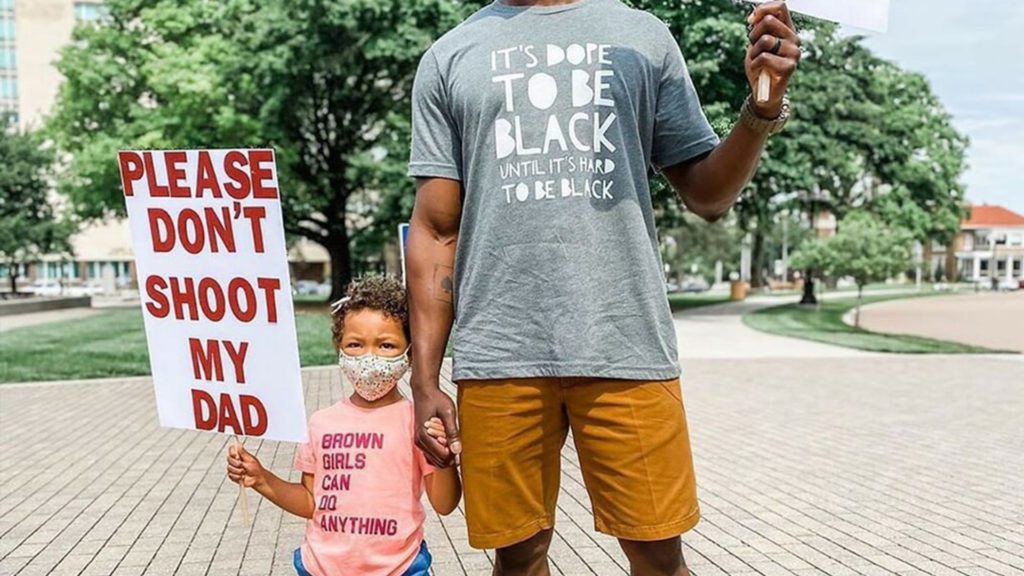
This point is taken from our How to be a good Dad post? Children constantly look to their parents to see the way they should behave. Even when you think they are not paying attention, they are. When dealing with a subject as sensitive as racism you must try to behave in a way you would like them to behave. If we can’t demonstrate anti-racism as parents how can we expect our children to?
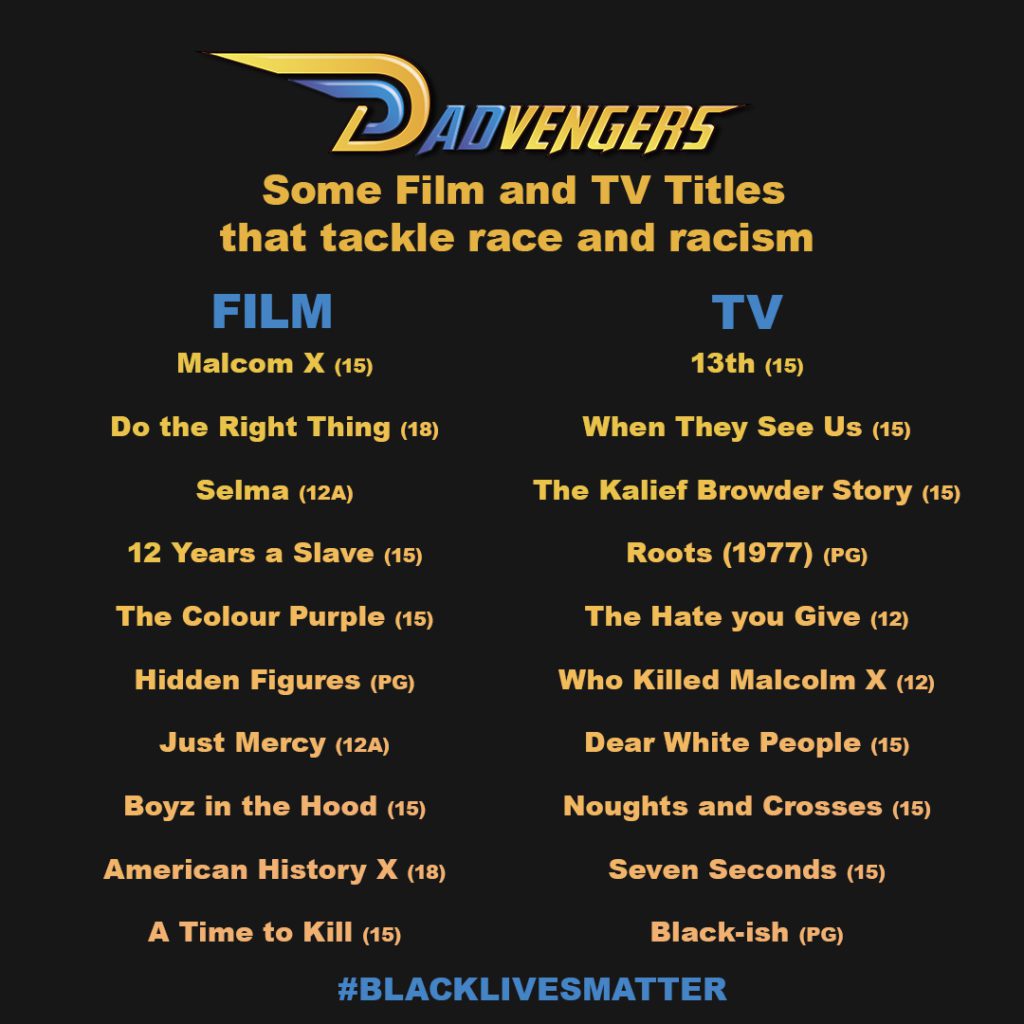
As a parent educating themselves about racism we are lucky to have some incredible films and TV shows that I regard as essential viewing. They cover different times, different subjects, different aspects, and different problems. I have included this basic list. Watch as many as you can, absorb them, imagine the atrocities were committed against you. Hopefully it will drive you to fight against racism and talk to children about #BlacklivesMatter.
It’s important that we hear from those of you out there living it. Have you got black or multiracial children? Have you’re kids experienced racism? What other resources can help with this topic?
Please leave your comments in the section below and share this post and other Dadvengers Posts with other dads and parents. The more the merrier. And remember, Mums, Grandparents, Carers, Parenting Professionals you are an integral part of this. We can’t improve things for dads and help make changes without you. So please help, even if it’s just sharing a post or making a suggestion.
Look forward to hearing from you
Dadvengers
